

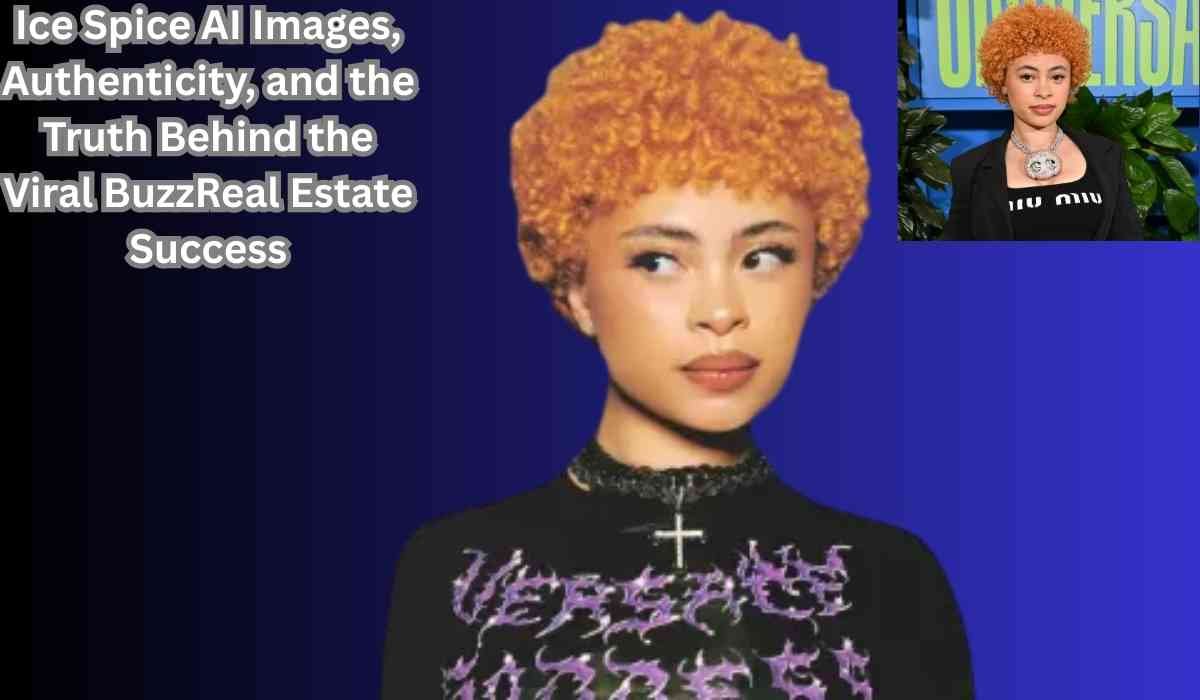
Ice Spice has become one of the most talked-about names in rap right now. But lately, the conversation has shifted from her music to something more unsettling: AI generated photos that don’t show who she really is. It’s a problem worth taking seriously.
The internet moves fast, and fake images spread even faster. Understanding what’s real, what’s manufactured, and why it matters helps us think more clearly about digital identity, celebrity culture, and the pressure women in the public eye face every single day.
Ice Spice AI Explained
Ice Spice AI content refers to images made using artificial intelligence tools that mimic real celebrity appearances. These aren’t filtered selfies or edited photos. They’re fully fabricated visuals built to look real, and they’re spreading across social platforms without any warning label.
The technology behind these images, often called hyper realistic AI photos, has gotten good enough to fool casual viewers. What used to take a professional studio now takes a few clicks. That’s what makes this conversation urgent, not just for Ice Spice, but for every public figure online today.
| Term | What It Means |
|---|---|
| AI Generated Image | Photo created entirely by AI, no real photo used |
| Deepfake | AI video or image that replaces a real person’s face or body |
| Photo Manipulation | Editing a real photo to change appearance |
| Hyper Realistic AI | AI output designed to look like a genuine photograph |
Key points to know:
- These images are made without a celebrity’s permission
- They spread quickly across Reddit, Twitter, and Telegram
- Most viewers don’t realize the images are fake
- The damage to a person’s online image can be lasting
Read more: 2026: Jenny Popach Age, Real Name & Biography
Are Ice Spice AI Images Real?
Short answer: no. Ice Spice AI images circulating online are not real photographs. They are computer-generated visuals, many created specifically to be provocative or misleading. None of them represent her actual appearance or anything she has consented to.
The confusion is part of the problem. When people see Ice Spice real image mixed in with AI fakes, it becomes hard to separate fact from fiction. That kind of online image distortion doesn’t just hurt her reputation. It shapes how people think about her as a person.
| Question | Answer |
|---|---|
| Are the AI images of Ice Spice real? | No, they are fully computer generated |
| Did Ice Spice approve these images? | No public approval or consent exists |
| Can you tell AI images from real ones? | Sometimes, but not always |
| Are these images legal? | Depends on jurisdiction, often legally grey |
What to watch out for:
- Images with slightly off skin texture or lighting
- No original source or verified upload
- Shared on anonymous accounts or niche forums
- Clickbait headlines around Ice Spice AI controversy
Ice Spice and Digital Identity
Your digital identity is basically how the world sees you online. For someone like Ice Spice, that identity is built on her music, her personality, her look, and her words. AI images hijack that identity and replace it with something she never said yes to.
This matters beyond celebrity gossip. Artificial intelligence in media is reshaping what we think is real. When fake images look authentic, the line between a person’s real self and their manufactured online presence starts to disappear, and that’s a serious problem for everyone, not just famous people.
How digital identity gets distorted:
- Fake images get shared as if they’re real
- Search results surface AI content alongside genuine photos
- Fans form opinions based on content that was never real
- The actual person loses control of their own narrative
AI Generated Celebrity Photos
AI generated celebrity images aren’t new, but they’ve exploded in volume and quality over the past two years. What used to be obvious fakes now look disturbingly real. Ice Spice is far from the only target, but she’s one of the most searched names in this space.
The rise of AI photo manipulation tools has made it easy for anyone to generate these images with almost no technical skill. That’s the scary part. It’s not just hackers or bad actors with expensive software. It’s regular users with free apps creating content that can genuinely harm someone’s reputation and mental health.
| Platform | How AI Images Spread |
|---|---|
| Dedicated threads, often not moderated quickly | |
| Telegram | Private groups with large followings |
| Twitter/X | Quote tweets amplify reach fast |
| TikTok | Reaction videos spread fakes further |
Why this is a growing issue:
- AI tools are now free and easy to use
- Content moderation can’t keep up with volume
- Deepfake celebrity images are harder to detect than ever
- Legal frameworks are still catching up
Ice Spice Body Positivity Message
Ice Spice has never pretended to be something she’s not. Her Ice Spice body positivity stance is visible in how she presents herself publicly. She embraces her curves, her natural hair, and her Bronx roots without apology. That’s actually rare in an industry built on manufactured perfection.
Her Ice Spice confidence comes through in her music and interviews. She talks openly about self acceptance and feeling good in her own skin. That message resonates especially with young women who are tired of being told they don’t fit a narrow beauty mold. It’s one reason her fanbase is so loyal.
Body positivity takeaways from Ice Spice:
- She doesn’t chase industry beauty standards
- Her look is consistent, not constantly reinvented for approval
- She represents a self acceptance journey that feels genuine
- Young fans relate to her realness more than her fame
Social Media vs Reality
Social media has always had a gap between what’s posted and what’s real. Filters, editing apps, and carefully chosen angles are standard now. But AI generated celebrity images push that gap into completely new territory, because now the image doesn’t even start with a real photograph.
Instagram beauty standards are already intense. Add AI fakes into the mix and you get a situation where fans compare themselves not just to filtered celebrities, but to images that are physically impossible. That’s a mental health issue dressed up as entertainment, and it doesn’t get talked about enough.
Social media vs reality breakdown:
- Filters adjust lighting, skin, and features in real time
- Editing apps remove or reshape body parts
- AI generates entirely fictional appearances
- All three contribute to distorted societal beauty expectations
Ice Spice Authentic Image
What makes Ice Spice stand out is exactly what the AI fakes try to erase: her Ice Spice natural look. She doesn’t show up to interviews or red carpets trying to look like someone else. Her style, her hair, her attitude, it’s all consistent and recognizably hers.
Ice Spice authenticity in an era of heavy curation is actually a statement on its own. When everyone around you is filtering and editing, choosing to show up as yourself takes a kind of confidence most people don’t talk about openly. That’s a big part of why she connects so well with Gen Z influencers and fans.
What authentic image looks like:
- Consistent style that doesn’t shift for every trend
- Public statements that match private behavior
- No dramatic reinvention just to chase popularity
- Fans trust what they see because it feels real
AI and Beauty Standards
AI and beauty standards are now deeply connected. The more AI generated images flood the internet, the more distorted our shared idea of beauty becomes. People start comparing themselves to faces and bodies that were never real. That’s not a small issue.
For women in entertainment especially, hyper realistic AI photos create a kind of impossible competition. Even the subject of those fake images can feel pressured to match them. It’s a bizarre and harmful loop where technology sets a standard that no real human can actually meet, including the person the image was supposedly based on.
How AI warps beauty expectations:
- Sets impossible physical standards using fake bodies
- Makes real appearances look “less than” by comparison
- Contributes to anxiety and poor self acceptance for viewers
- Normalizes a look that doesn’t exist in reality
Deepfake Celebrity Concerns
Deepfake celebrity images are a genuine threat, and not just to privacy. They can damage careers, destroy reputations, and cause real psychological harm. Ice Spice has been a target, but this affects celebrities across every industry.
The concern goes beyond embarrassment. Online vulnerability is real when your face can be placed on content you never agreed to. Laws are starting to catch up, with some states and countries moving to criminalize non-consensual deepfakes. But enforcement is still messy, and the images keep spreading faster than they can be removed.
| Concern | Impact |
|---|---|
| Non-consensual images | Psychological harm and privacy violation |
| Career damage | False narratives affect public perception |
| Fan misinformation | Fans believe fabricated content is real |
| Legal gaps | Many jurisdictions have no clear law yet |
Why deepfake concerns matter now:
- Tools are accessible to anyone with a smartphone
- Removal requests are slow and often ignored
- Victims have limited legal recourse in most places
- The stigma falls on the victim, not the creator
Ice Spice Empowerment Impact
Ice Spice represents something real in pop culture: a young woman from the Bronx who made it without shrinking herself. Her female empowerment in rap isn’t a brand strategy. It shows up in her lyrics, her interviews, and how she handles public pressure including the AI image controversy.
Her Ice Spice confidence has an impact on fans that goes beyond music. Young women watching her navigate fame, criticism, and now AI-generated fake images see someone who doesn’t collapse under pressure. That kind of self acceptance journey modeled publicly is more valuable than any carefully crafted PR campaign.
Ways Ice Spice creates empowerment impact:
- Talks honestly about her background without romanticizing it
- Refuses to change her appearance to fit industry norms
- Responds to criticism with calm rather than panic
- Her presence in rap expands representation in pop culture
Instagram Culture and Filters
Instagram beauty standards didn’t appear overnight. They were built slowly through years of filtered selfies, sponsored posts, and carefully curated grids. The result is a platform where most people only show the version of themselves they’ve optimized for attention.
Curated social media images make it hard to know what real people actually look like. When AI enters that space, it doesn’t just add to the problem; it multiplies it. Now the images aren’t even starting from a real place. Ice Spice pushing back against that culture, even indirectly, is worth noticing.
How Instagram culture shapes perception:
- Filters are applied before photos even leave the camera app
- Follower counts signal “worth” in ways that distort self-image
- Celebrity online persona rarely matches everyday reality
- Young users internalize curated images as normal baselines
Representation in Modern Hip Hop
Women in hip hop culture have always had to fight for space, respect, and the right to define themselves. Ice Spice is part of a generation pushing that further. She represents a version of femininity in rap that isn’t performing toughness or trying to look like what the industry historically rewarded.
Representation in pop culture matters because it shapes what young people think is possible. Seeing someone who looks like them, talks like them, and comes from where they come from making real moves in music sends a message. AI fake images try to reduce that to something physical and provocative, which is exactly the opposite of what her actual impact is about.
Why representation in hip hop still matters:
- Women in hip hop culture are rewriting what success looks like
- Diverse bodies and backgrounds are finally getting mainstream space
- Artists like Ice Spice challenge narrow societal beauty expectations
- Authentic representation builds deeper fan connection than image alone
Conclusion
Ice Spice’s rise is built on something real: talent, confidence, and a refusal to apologize for who she is. The Ice Spice AI controversy tries to reduce her to fake images, but it ends up proving the opposite point. Authenticity stands out precisely because so much online content isn’t authentic at all.
The bigger conversation here is about digital identity, consent, and what we normalize when we share AI content without thinking. Every click on a fake image feeds a system that harms real people. Choosing to engage with Ice Spice’s actual work, her music, her words, her message, is a better use of that attention.
